 callex
Back to blog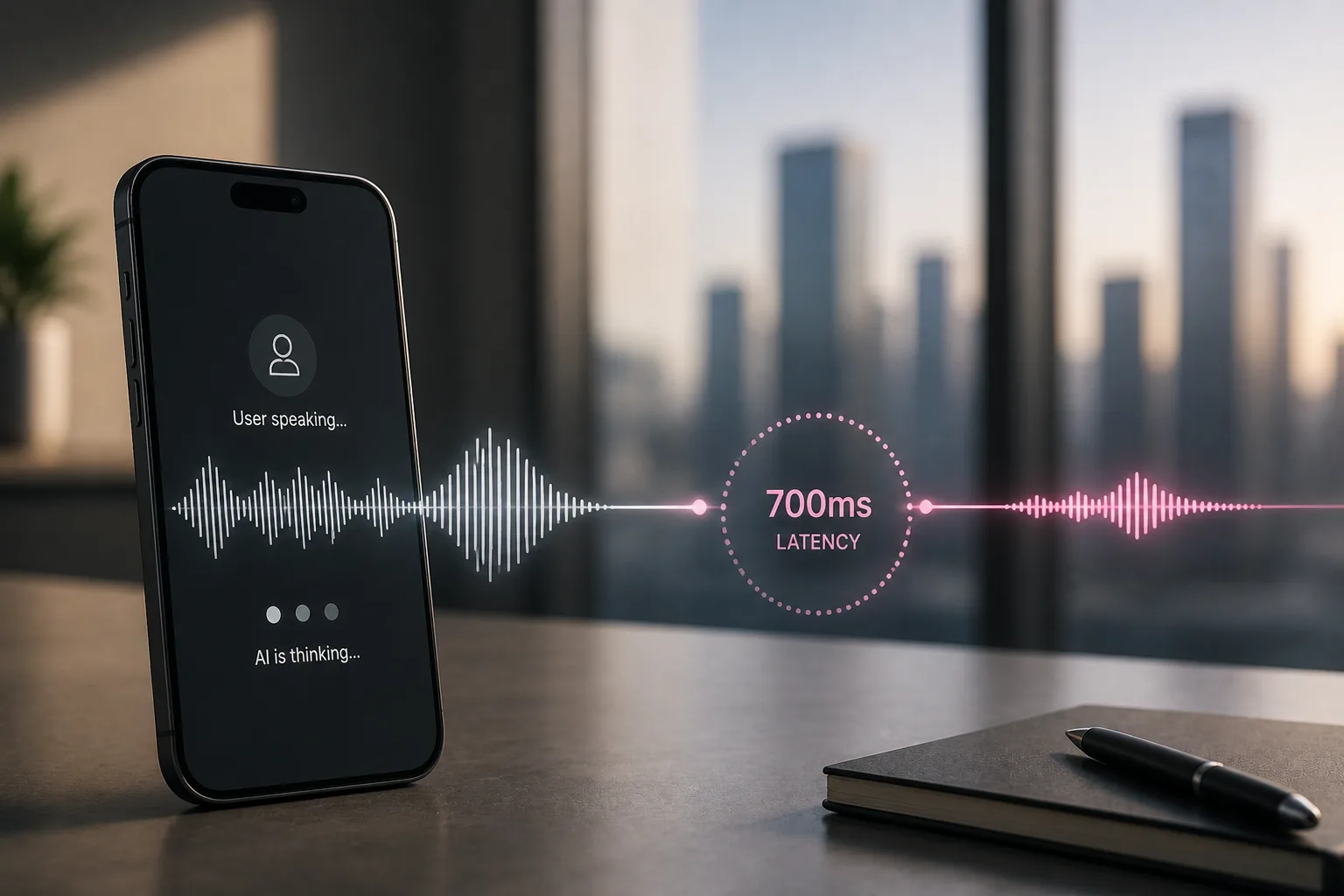
PerformanceVoice AITechnology
Why Latency Shapes Whether Voice AI Sounds Natural
Latency is one of the biggest factors in a voice agent. Here’s what it is, why response time matters, and what to ask vendors.
·2 min read·Callex Team
Latency is one of the biggest factors in a voice agent. Here’s what it is, why response time matters, and what to ask vendors.
When people ask why a Callex agent sounds natural, a big part of the answer is not only the voice or the script. It’s latency.
Latency is the time between the moment a caller stops speaking and the moment the agent starts responding.
In human conversation, the natural pause is often around 200–400ms. Past roughly 700ms, the conversation can start to feel off. Beyond about 1.5 seconds, some callers begin to wonder if the line dropped.
An AI call moves through three stages:
Caller speech → STT (speech-to-text) → LLM (reasoning) → TTS (text-to-speech) → response
Each stage adds time:
That totals anywhere from 400ms to 1.5s, and the difference is very noticeable to a caller.
Instead of waiting for each stage to finish, each stage can start working on the first chunk of output from the previous one. The LLM begins generating, TTS begins speaking the opening words, and by the time the LLM finishes, part of the sentence may already be spoken.
Not every question needs a frontier model. “What are your hours?” is a simple lookup. We route simple intents to small, fast models and reserve heavier reasoning for when it’s actually needed.
Multi-region deployment keeps the network distance short. Small round-trip improvements can matter in a live conversation.
Ask one question: “What is your agent’s P95 latency?”
P95 is the latency that 95% of calls come in under. If a vendor can’t answer, it may mean they are not measuring it consistently.
Latency is one of the hardest things to forgive in an AI call. People can adjust to an imperfect voice, but it is harder to adjust to a conversation that feels delayed.
When you evaluate a voice AI vendor, ask to hear a live call, not only a recorded demo.
 Outbound
Most organizations sit on a backlog of leads that never closed. Instead of writing them off, an outbound AI agent can re-qualify the whole list and surface who is still interested.
 Healthcare
Clinics can lose meaningful revenue to appointments that never show. Here’s how voice AI books, reminds, and helps reduce cancellations.
Talk to our team about your use case and see Callex running on your own calls.